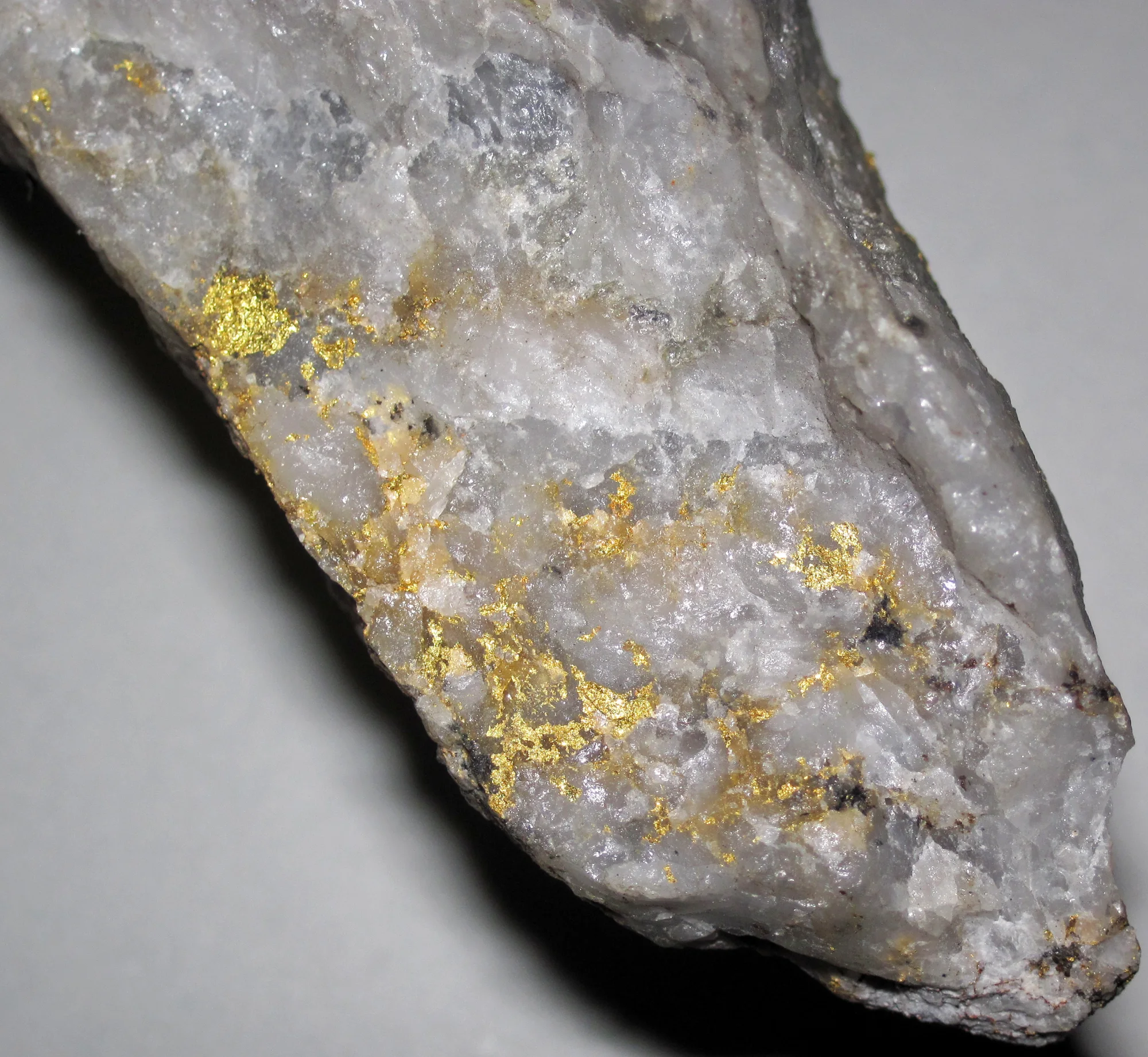
Gold ore containing liberated gold or high-grade composite particles can respond to gravity methods. Start by identifying those particles, testing their response at a defined preparation stage, and deciding how the resulting concentrate would fit into the proposed processing route.
For a mine owner, separate two decisions: whether to investigate a gravity stage, and whether to build a plant around it. Keep the second decision open until representative tests explain the concentrate, the remaining material and the proposed operating conditions.
Start with the gold-bearing particle
Gravity concentration exploits the density contrast between gold and common silicate gangue, while particle size, shape and slurry properties affect separation.
Gravity-recoverable gold, or GRG, includes liberated gold and high-grade composite particles that respond to gravity methods. Composite particles may respond to gravity concentration when their gold proportion provides sufficient particle density.
This distinction matters when interpreting a mineralogical report. Request a description of the gold-bearing particles, their host minerals and their degree of liberation at the proposed preparation stage. Avoid reducing the assessment to a simple “free gold present” checkbox.
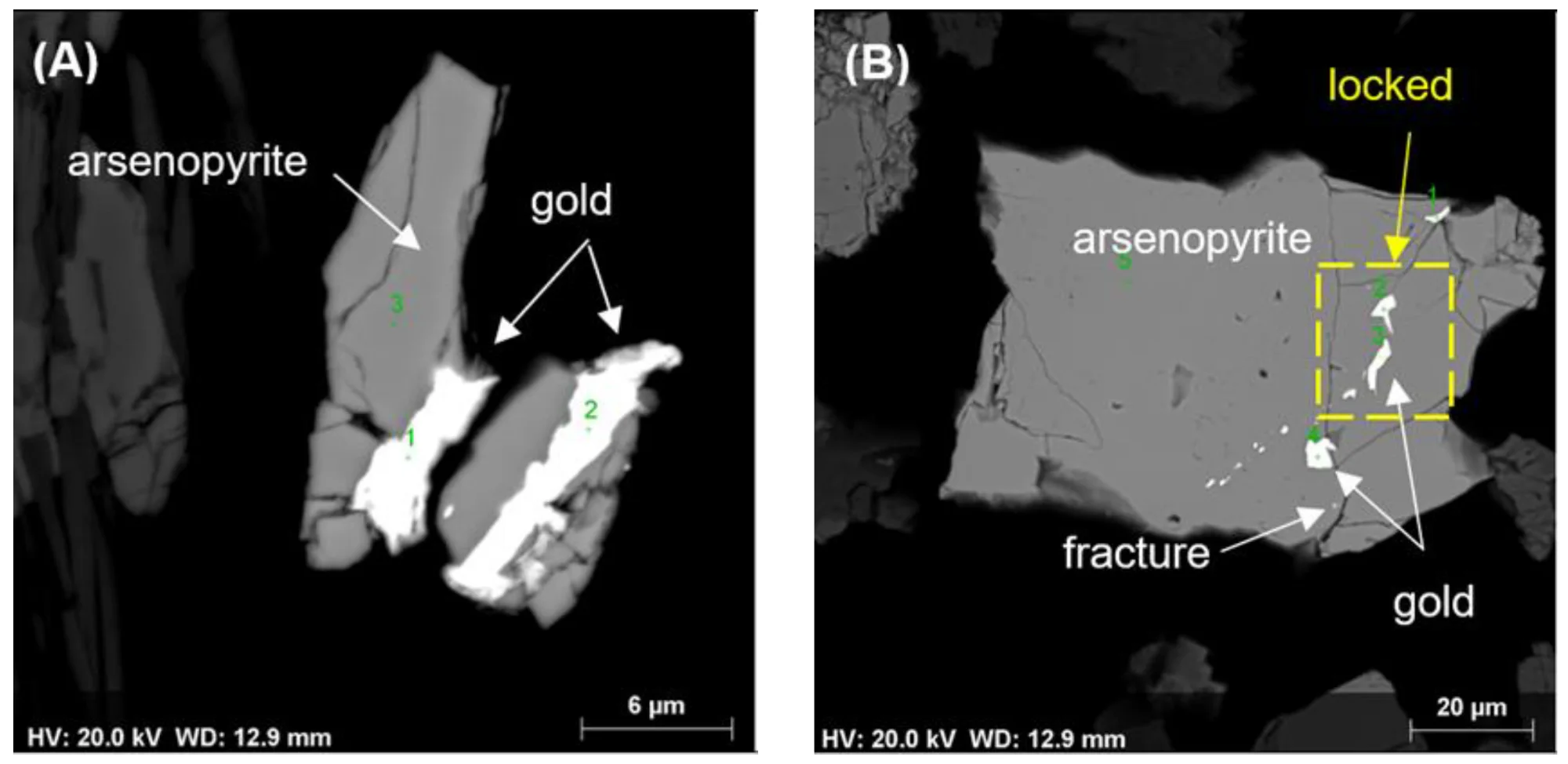
The opposite boundary also deserves attention. A study of tailings-derived sulfide concentrates associated poor gravity recovery with fine particles and largely encapsulated gold. That finding concerns the tested concentrates; use it to frame a question about similar material, rather than to reject every sulfide-bearing ore.
Measure gold distribution by size
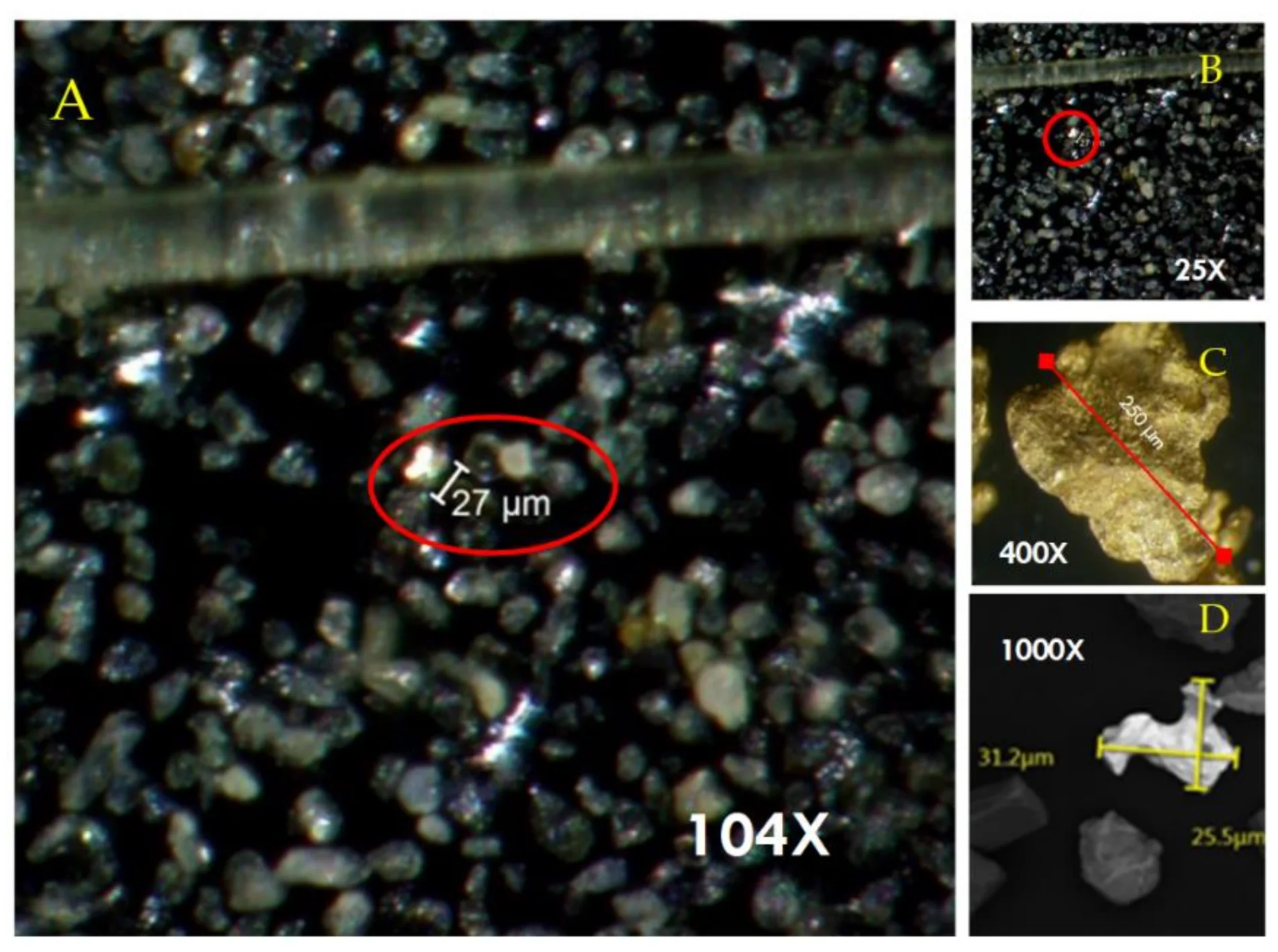
The size distribution of gold differs from the size distribution of the bulk ore. A screen analysis tells you how much material lies in each fraction; pair it with gold assays to determine where the metal lies.
Assess both the coarse and fine fractions. Gold-size information drawn from pre-screened samples or a restricted test-size range does not describe all the original material. Retain the excluded fractions for separate examination rather than calling the remaining sample representative of the whole deposit.
Alluvial deposits can differ in fine-gold content, with gold-size distributions reflecting the ore and its source area. Treat “alluvial” as a starting description, not a substitute for measurement.
Particle shape also deserves examination. Research on a grinding–gravity circuit found particularly flattened gold particles in cyclone overflow compared with laboratory concentrate. Include shape observations when investigating why gold responds differently in a plant and a small test.
Ask the laboratory to explain the response of each size fraction under the proposed conditions. Avoid converting a quoted fine-particle capability into an expected recovery for the entire ore.
Evaluate the prepared slurry
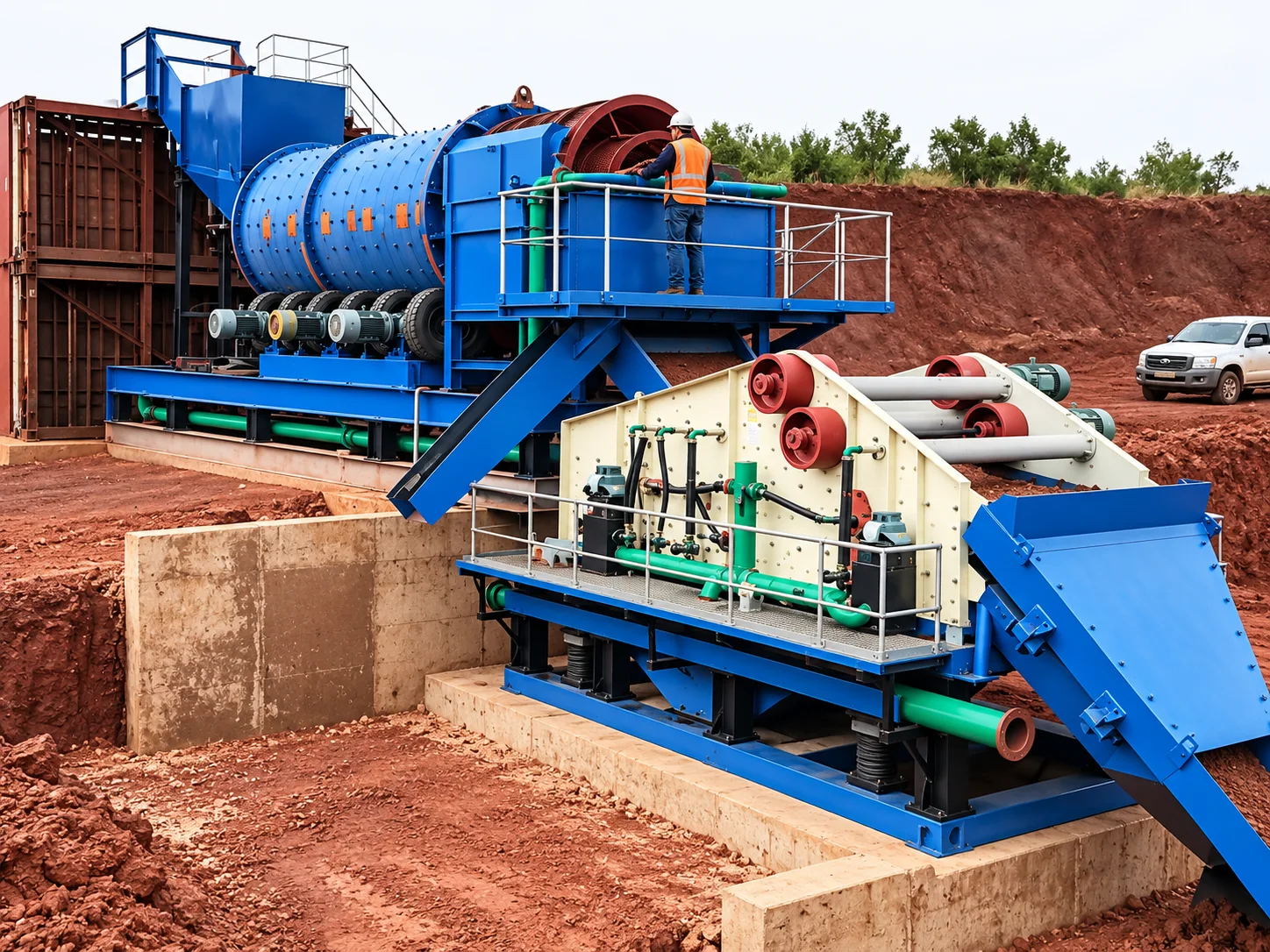
Clay minerals can increase pulp viscosity and reduce centrifugal gold recovery. Evaluate the slurry after its intended washing, screening or grinding steps, rather than testing an unusually clean fraction without documenting the preparation.
Scrubbing and screening can release gold trapped in clay-bound or weakly cemented alluvial material before sluicing. Discuss a preparation trial when that binding is observed. Record where every removed fraction goes, and retain material for assay before deciding to discard it.
Distinguish releasing particles from selecting them. Washing tests should address the material binding; gravity tests should address the response after preparation. Keep the link between the original sample and the tested fraction visible in the report.
For a proposed operating trial, record water conditions, slurry concentration, material flow and cleanup practice. Repeat the observations on material representative of the intended operation. Request explanations for any difference between the test preparation and the proposed plant preparation.
Commission representative gravity testwork
Mineralization heterogeneity produces variation in grade and process response; spatially distributed samples and suitable protocols support a representative GRG assessment. Agree on the sampling plan with the geologist and metallurgist before sending a convenient bag of material to a laboratory.
A staged GRG test characterizes progressive liberation, the size distribution of recoverable gold and the grind at which it becomes recoverable. The staged protocol produces separate concentrates representing different degrees of grinding and liberation.
Use those results to ask where the proposed gravity stage should act. If meaningful concentration appears after further preparation, request a trial at that preparation stage. If the response remains weak, investigate the residual gold before committing to additional gravity equipment.
Simplified GRG procedures can lose information relative to full staged characterization. Choose the test with a defined purpose: an initial screening question, a liberation assessment or evidence for a proposed circuit. Ask what the chosen procedure leaves unanswered.
Review the products together. Gold assays of concentrate, middlings and tailings support a whole-sample gold-size assessment. Check the masses and assays used in the reported gold balance, and distinguish an enriched intermediate product from the final product.
Separate laboratory potential from plant recovery
Plant gravity recovery can differ from laboratory GRG estimates because of particle-shape changes, the circuit fraction treated, cyclone classification and concentrator operation. Use laboratory GRG as evidence about the tested material; assess the proposed circuit before carrying that result into a plant forecast.
Identify the stream to be treated, the preparation already completed and the destinations of concentrate and tails. Discuss the intended treatment of coarse and fine fractions, the material returned for another pass and the product sent for final upgrading.
A study of tailings-derived sulfide concentrates used centrifugal concentration followed by table upgrading in a two-stage gravity process. It illustrates a useful reporting distinction: name the product being measured. Ask whether a quoted result describes the initial concentrate or the final gravity product.
Specify the final product objective before comparing trials. An owner may be evaluating a gravity-dominant route, a gravity stage within a broader route, or a possible retrofit. State which decision the work is meant to support.
Choose the next step from the evidence
Use this proposed decision framework after reviewing the sampling, mineralogy and test results. The outcomes below are planning choices, not universal ore classifications.
| Evidence available | Next step to consider | Condition to keep open |
|---|---|---|
| Representative trials show a repeatable response and a usable final concentrate | Evaluate a gravity-dominant flowsheet | Confirm the residual-gold balance and project economics |
| A worthwhile fraction responds, while substantial gold remains in other material | Evaluate gravity as one stage of the route | Establish the destination and treatment of the remaining material |
| The response changes materially with preparation or slurry conditions | Test washing, classification or grinding arrangements | Quantify the gold in every removed or returned fraction |
| Representative trials remain weak, or the residual gold lacks an established gravity response | Investigate the limitation before buying more gravity equipment | Identify what further work could change the decision |
Judge the proposed investment against measured results and project-specific costs. Compare complete routes, including preparation, concentrate upgrading, water provision and residue handling. Set a clear acceptance criterion for the next trial instead of ordering equipment to resolve an unexplained result.
Bring an ore brief before requesting a plant quotation
Prepare a concise brief with:
- Deposit and material descriptions, sample locations and preparation records.
- Gold-bearing mineral observations and liberation at the tested stages.
- Bulk sizing alongside size-by-size gold assays.
- Washing, classification and staged gravity-test results where applicable.
- Product masses, assays, gold balances and repeat-test observations.
- Proposed stream connections and final concentrate objective.
- Planned scale, water and power arrangements, and operating constraints.
With that brief, request a trial or proposal tied to the measured material and defined duty. Commit to the next stage when the evidence explains both the recovered gold and the gold left behind.